Drying herbs at home: low and slow beats hot and fast
16 July 2026
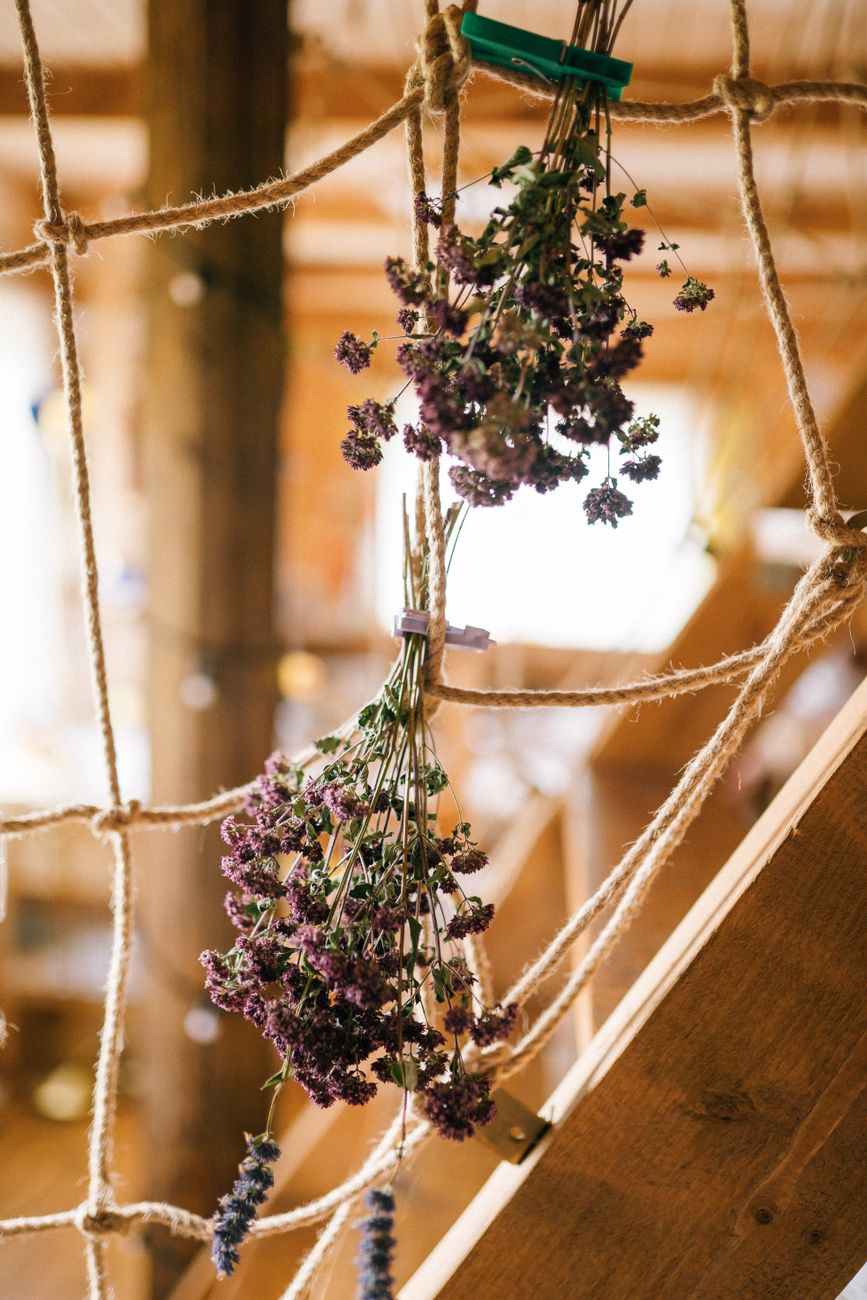
People assume the skill in our work is the growing. It isn't — it's the drying. The difference between a herb worth keeping for a year and a jar of green dust is mostly what happens in the week after harvest.
The one rule: stay under 40°C
The volatile oils that give a herb its scent, flavour and medicinal value start to escape rapidly above 40°C. An oven on its lowest setting is usually 60–80°C — too hot. Our drying room never passes 38°C, and most herbs spend five to ten days there. Slow is the point.
What works in a house
- Hanging bunches — the classic, and still the best for woody herbs like thyme, sage and rosemary. Small bunches (thumb-thick at the stems), somewhere warm with moving air, out of direct sun. A kitchen away from the kettle's steam, an airing cupboard with the door cracked open.
- Flat on mesh — better for leaves and flowers: nettle, mint, heather, elderflower. Single layer, turned daily.
- A dehydrator — the reliable option if your house is damp, which in Scotland it probably is. Set it to 35°C and give it longer than the manual says.
How to know it's done
Leaves should snap, not bend. Stems should crack cleanly. If anything flexes, it still holds water and will moulder in the jar. Store whole (not crumbled — surface area is the enemy), in glass, in the dark, and write the date on the lid.
Our Home Herb Dryer Kit in the shop bundles the racks, probe and bags we recommend, along with the full drying guide.